The fact that my last newsletter was almost six months ago and was about the surprise death of my cat and my aunt should tell you everything you need to know about why it’s been so long since I last wrote to you. Things didn’t really get much better and then the weather tried to kill us all and before I knew it six months has passed and I hadn’t written much or exercised or sent a newsletter or anything.
While things aren’t exactly looking up (I’ve been getting Tarot readings for the last year that are all basically some version of “your life has been absolute hell and you didn’t really deserve it, but you’re almost done and it will all be worth it” but with no clue whether “almost done” means I’m a day or a month or a year away), I can’t wallow and fall further behind with the stuff that actually makes me happy in life so onward we go.
Thanks for reading Magic to Do! Subscribe for free to receive new posts and support my work.
Some good things have happened like my son graduating from high school and getting new rescue kittens, and I want to share those. Going forward, the plan will be to do this newsletter twice a month: one will be personal life and writing updates and the other will be an interview.
Now onto the latest BQ&A interview with Maris Kreizman.
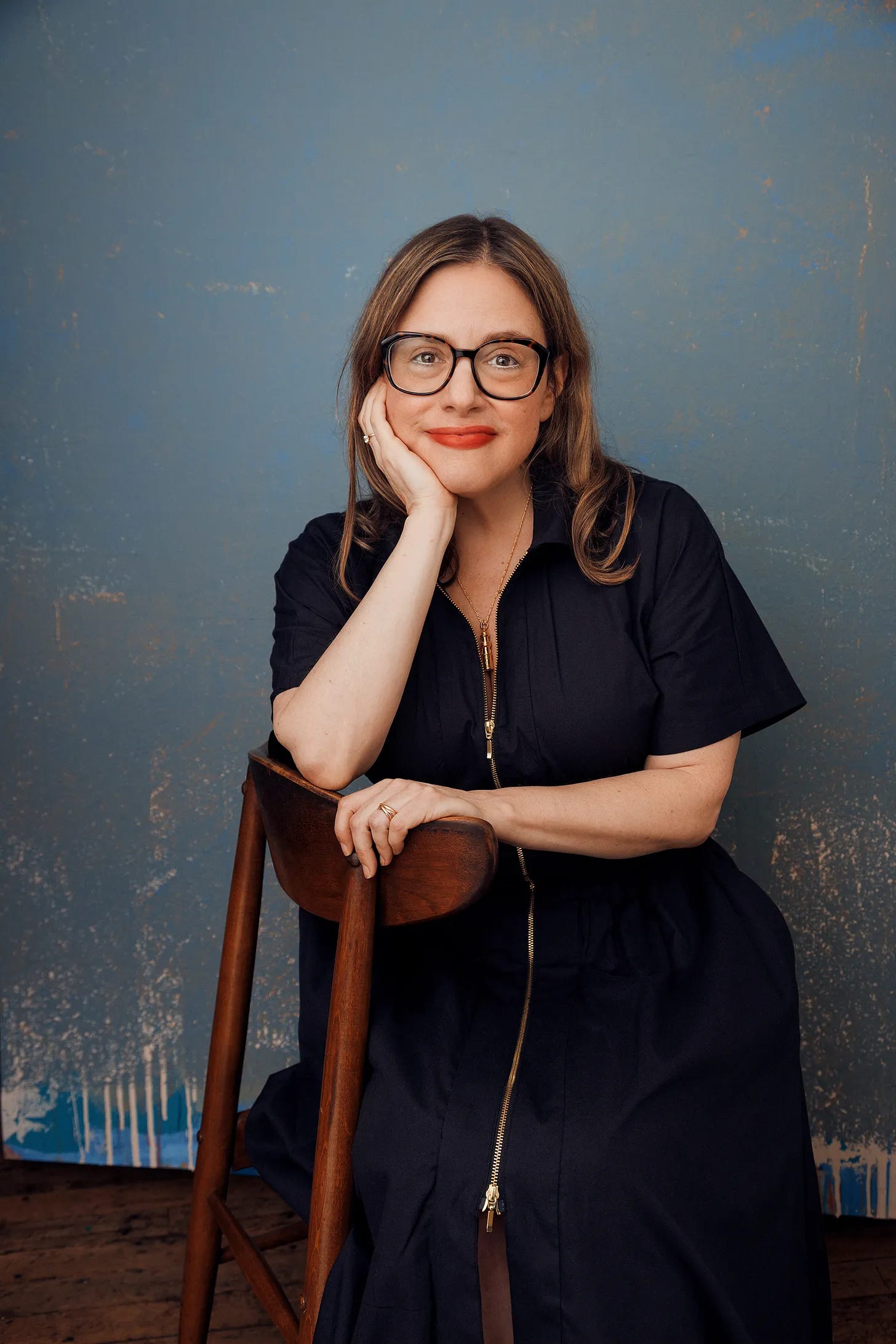
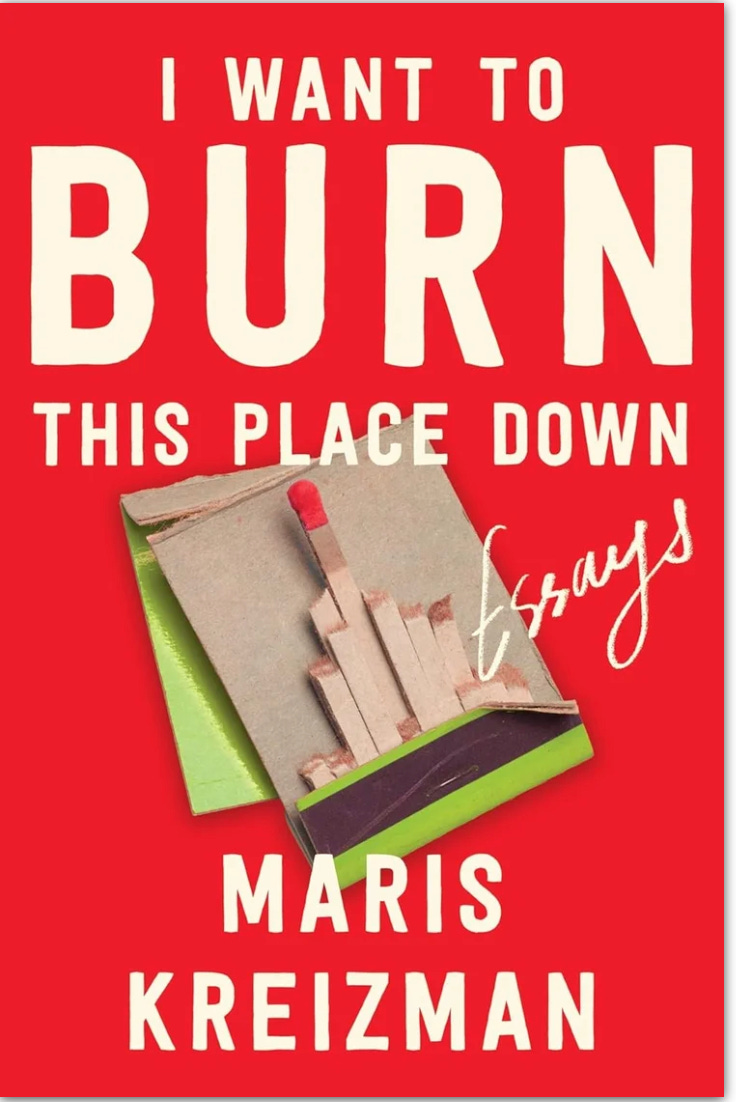
Like most of the other subjects of these interviews, I don’t remember a time I wasn’t reading Maris Kreizman. She was one of the first literary bloggers I remember following and it’s been interesting following her career since then. Her essay collection, I Want to Burn This Place Down, is one of my favorite books of the year and one of my favorite essay collections of all time. It’s now available in paperback, so be sure and get yourself a copy. This interview was conducted over Google Docs (quite a while ago, to be honest) and has only been lightly edited for formatting.
BQ: I want to start with I Want to Burn This Place Down, which I loved deeply, especially the essay about living as a diabetic. Do you remember the moment you realized that this wasn’t just material you were surviving, but material you were writing?
MK: Writing this book made me step back and consider what I think about hour by hour, minute by minute. And because I’m constantly making decisions about my insulin doses and my blood sugar, I realized that my disease colors just about everything else I consider.
BQ: How do you calibrate emotional distance when writing about the body—especially a body that demands constant vigilance?
MK: I don’t think I do calibrate emotional distance. I mostly let it all hang out? But I’m flattered you thought so.
BQ: Many writers describe chronic illness as either metaphor or interruption. For you, does it function more like a rhythm that structures time, thought, or even syntax?
MK: For me, diabetes is an organizing principle. It’s the lens through which I see everything else. Diabetes had to be the topic of my first essay, because it has informed the way I see everything else that follows. As a child I was told that diabetes would be a nuisance but not a defining factor in my life. As a young adult I wanted so much for that to be the case but found that was not so. It will always be a defining part of who I am.
BQ: Your essays often resist the tidy arc of “and then I learned.” Do you distrust insight, or are you more interested in the moment just before insight hardens into something marketable?
MK: When I wrote my book proposal I ended it by saying I didn’t want a happy ending and I certainly didn’t want to give practical advice in the final chapter. I know that in pushing for a more marketable angle, publishers like to end much personal writing with some bullet points that readers can take away once they’ve finished reading (or before they’ve finished reading). In the culture now in general I think people are trained to expect a few easy bullet points rather than having to dwell on any kind of open-ended questions. But I thrive on open-ended questions.
BQ: I was struck by how funny the book is, even when it’s circling anger, fear, or exhaustion. Do you experience humor as a defense mechanism, a weapon, or simply a byproduct of clarity?
MK: It’s a coping mechanism, I think. I don’t see how you could face all of the darkness in the world without being able to laugh about it.
BQ: When you’re writing autobiographically, what tells you that a detail is too private? Not morally, but aesthetically.
MK: Unlike most of our elected leaders, I experience shame. I experience it a lot. I know the writing advice is to write what makes you feel most vulnerable to share, but that’s not for me. Not yet anyway.
BQ: In your essay about diabetes, the medical system looms quietly but menacingly. Do you think of institutions as characters when you write, or are they more like weather?
MK: The systems are the setting. Everything else that happens to me throughout this book takes place under a certain set of (pretty bleak) conditions.
BQ: You’ve written incisively about pop culture and a favorite of mine is your piece on Daria that feels like criticism as memoir. What did that show teach you that you couldn’t have learned any other way?
I think our culture loves a curmudgeon. And I think it’s still rare to see a curmudgeon who is also a teenaged girl.
MK: That it’s cool to be skeptical. So much of my book is about wishing I was more able to call out bullshit that Daria did.
BQ: Do you think Daria endures because she refuses growth, or because she grows in ways the culture doesn’t reward?
MK: I think our culture loves a curmudgeon. And I think it’s still rare to see a curmudgeon who is also a teenaged girl.
BQ: When you’re writing criticism versus personal essay, what changes first: your voice, your permissions, or your sense of risk?
MK: When I first sold this book, my editor at the time, Sara Birmingham, told me to think about what I would want to write if I didn’t have any limits – no concerns about word length or tone or worrying about a publication’s voice. I found that really freeing and also very difficult! Constraints can be very helpful. But yeah, I think with this collection what changed was the permission to not make everything so neat and pretty.
BQ: Your work often feels in conversation with other writers rather than in competition with them. We’re lucky to share Sarah Weinman as a friend, and I’m curious how having smart, generous readers in your life affects your work. Do you write with specific people in mind?
MK: I’m so sorry to admit but I very rarely write for the generous readers, who I’m so lucky to have; I write for the trolls. I hate this about myself.
BQ: Your essays are clearly shaped by politics and gender, but they never feel preachy. How do you hold onto that awareness without letting it crowd out the messier, more human parts of the story?
MK: One of the reasons I wrote this book is because I know I have been messy and I know I have been naive. I’m trying to give my former self a little bit of grace, and in that act I hope to give my readers some grace too. It’s never too late to go back and say, I was wrong. I thought the world worked in this certain way, and through years of lived experience, I’ve learned that it doesn’t.
BQ: When writing about yourself, do you imagine a reader who resembles you, or one who fundamentally doesn’t?
MK: As I said earlier, to this day I’m writing mostly with Twitter trolls in mind. I’m not even on Twitter anymore but those are the imagined voices I hear. It’s a bad way to be but it’s who I am.
BQ: You often write about anger, particularly women’s anger, with real precision. When you’re writing about anger, do you trust it more when it feels justified, or do you find yourself more interested in the kinds of anger that are uncomfortable or even a little embarrassing?
MK: There is so much to be angry about all the time. I think what I try to do, in my best moments, is to think about how that anger can be productive, or at least helpful to others. But every now and then the unfiltered anger still rears its ugly head on social media.
BQ: How has the internet changed your sense of audience intimacy? Does it make confession easier, or does it raise the stakes?
MK: I don’t think I really found my voice as a writer until I had gotten used to posting on social media and having conversations with people there. The stuff that I wrote in my book, aside from the essays that are excerpted, can only be found in the book. That is a much smaller audience of people who intentionally seek it out. I think that does provide a bit of a safe space.
BQ: What’s a piece that surprised you when you wrote it? One that felt truer than you intended?
MK: I think writing this piece about not centering American Jews in a time of genocide changed my life. There was so much anger. The comments are really ugly. But I stand by every word, and I’ve found a network of colleagues and friends because of that stance.
BQ: Do you think essays eventually end because the writer feels they’ve said enough or because they’re afraid of saying one thing too many?
MK: Ooh, both at the same time.
BQ: Finally, who are you reading these days? Who should everyone be reading these days?
MK: Everyone should read Namwali Serpell. Her fiction is exquisite (The Old Drift never got as much credit as it deserved but it’s an all-time favorite of mine) and her new book about Toni Morrison is like taking a master class in literature with her.
I also really loved Discipline by Larissa Pham, an incredible debut novel about the successes and shortcomings of autofiction.
Maris Kreizman is an essayist and critic with a bi-weekly column at Lit Hub whose work has appeared in The New York Times, New York Magazine, The Wall Street Journal, The LA Times, Vanity Fair, BuzzFeed, The Atlantic, Esquire, The New Republic, Cosmopolitan, The Ringer, GQ, Publishers Weekly, Smithsonian, Town & Country, and more.
She’s the creator of Slaughterhouse 90210, a blog and book (Flatiron Books, 2015) that celebrates the intersection of literature and pop culture. She was previously the editorial director of Book of the Month, the editorial director of digital content at B&N.com, and a publishing outreach lead at Kickstarter.
She lives in Brooklyn with her husband, her dog, and her books.