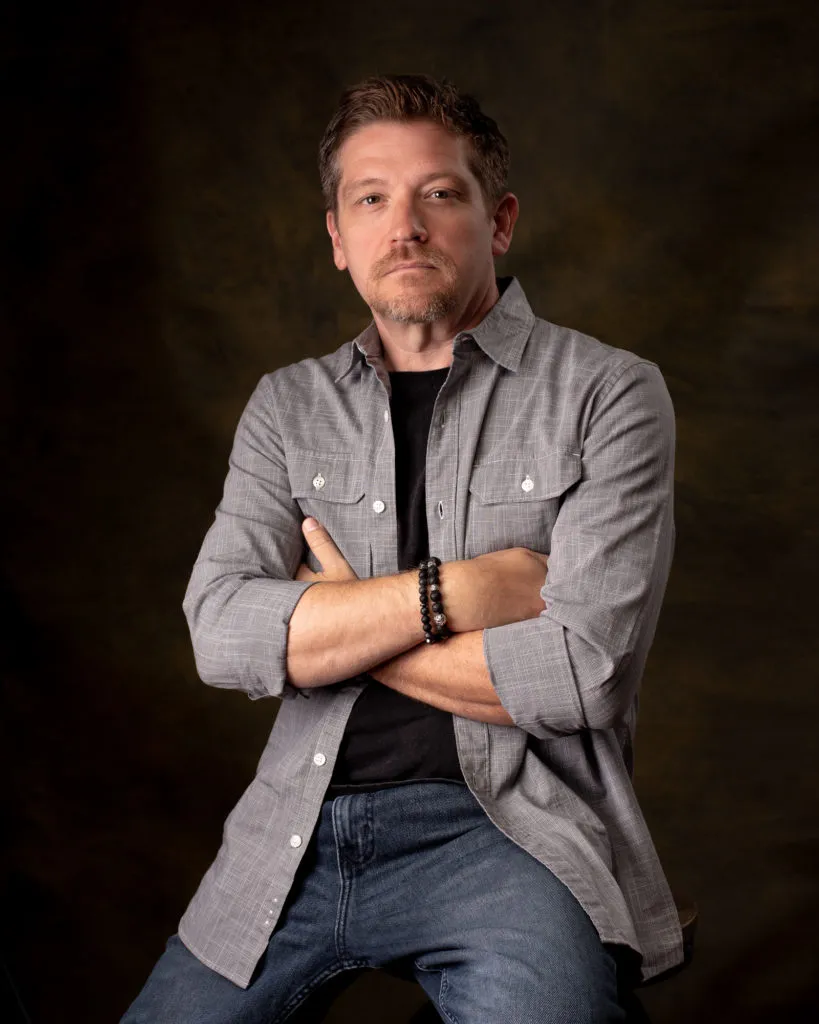
J. Todd Scott is one of of those folks I first met through social media and have had the pleasure of also meeting in person. I’ll always have a special affection for the first time we met because it was at the Bouchercon Putnam author party and I was there as a Stuart Woods co-author. It was the first time I’d ever been to one of the big publisher parties as an author. He could not have treated me better, and we’ve had a cool online correspondence since.
I was really excited he agreed to do this interview because not only do I love that he’s writing novels and TV shows now full time after retiring from a full-time career in law enforcement, but I also love that he’s not a young author and doesn’t try to be. As I approach 50 and tend to think my best opportunities are behind me, he’s one of the people I look to that makes me rethink that and realize my best opportunities are likely still ahead of me.
Thanks for reading Magic to Do! Subscribe for free to receive new posts and support my work.
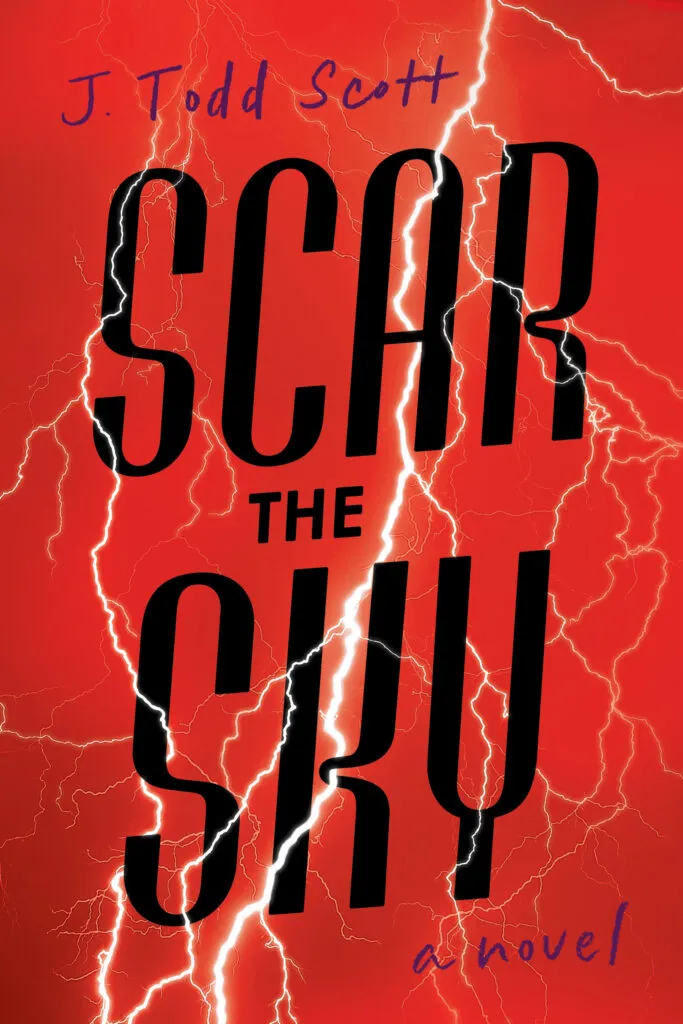
After starting with a very cool trilogy of western-themed crime novels, his latest is a horror thriller called Scar the Sky. This interview was conducted over Google Docs and has only been lightly edited for formatting.
BQ: You spent over two decades as a DEA agent before publishing your first novel. At what point during that career did you begin to feel that the impulse to write was not just an outlet but a parallel vocation?
JTS: The cliched answer is when I sold that first novel, The Far Empty, which happened within a three year period once I started seriously writing again. But the more honest answer is I still considered it an outlet or a hobby, right up until the moment I finally retired from DEA, and had to accept that the law enforcement career that had defined nearly my entire adult life was over. Until that day, I always introduced myself as a federal agent first, and even now, struggle to call myself a full-time author or novelist.
Writing is such a surreal, difficult profession, it can be hard to believe it’s ever “real,” and even harder (at times) to believe it’s sustainable. That’s why I stayed with DEA right to the end even after I started achieving some measure of success with my writing, and even turned down certain film and TV writing opportunities because I was still reluctant to give up my law enforcement career.
BQ: When you sit down to begin a novel, what usually arrives first? The image, the character, the cadence of a voice? Or is it a problem you want to solve on the page?
JTS: Almost always it’s a character for me, a full-fleshed out individual I want to explore, although my book Call the Dark was born out of a very specific image: the plane crash that opens the book. To me, living with these characters is the whole point of writing. I always say I’m a horrible mystery or crime writer because the mystery or crime itself are the least interesting things to me; once the bullet has left the gun or the trigger has been pulled, it’s always about how the characters react or respond to the collateral damage.
BQ: As someone who balanced law enforcement with writing for many years, how did you carve out time and space for the page? Do you still feel echoes of that double life in the way you approach work today?
JTS: I noted this on my own Substack the other day: I never had a problem finding the energy to write while I was a federal agent, even if it meant carving out an hour at 4:30 or 5:00 in the morning (what eventually became my usual writing time). Since writing was my outlet, my hobby, a creative escape from my real but very different kind of job (and I never had enough time for it), I always looked forward to stealing those minutes.
Now that I have all the writing time in the world, I do find I have finite writing energy, and have been struggling to balance all the contracted writing I’m doing for TV and film with my own WIP novels and screenplays. I’m now employed as a writer, which means writing isn’t technically an escape anymore, it is my job. So, writing on something I love on my own for two hours in the morning, and then going to a TV writers room or writing on a feature or script for another 7 or 8 hours can be daunting.
I never knew what my writing limits were because I never had the chance to push against them, and now I am. It’s simply requiring me to reassess how I balance ALL the writing, which is a good problem to have.
BQ: Your novels are often steeped in the geography and mythology of the border. Do you see the border as primarily a setting, or as a character in its own right—an elemental force shaping everyone who comes into contact with it?
JTS: Every setting is a character, and all other characters are shaped by where they’re from, where they were raised, the world they see outside their windows. It’s the idea of what “home” is, and how we carry home with us, or parts of it, wherever we go. I don’t know how to write a book where “place” isn’t intrinsically tied to the plot, and the characters aren’t affected by it.
BQ: Your books resist easy definitions of good and evil, cop and outlaw. How do you approach moral ambiguity without losing the narrative tension readers expect from crime fiction?
JTS: Most people don’t think of themselves as villains; they’re all heroes in a way in their own lives, in their own stories, so I think my books simply reflect that. People make all sorts of bad choices for what they believe are good reasons (or necessary ones), and vice versa, so that’s what interests me as a writer. The narrative tension is not specifically the why of the things they do, it’s the consequences of those things (i.e., the collateral damage, I mentioned above).
BQ: There’s a stark poetry in the way you describe your settings. Do you see the setting of your novels as a mirror for the inner lives of your characters, or as a counterpoint to them?
JTS: Interesting question…probably a bit of both. Again, I think we’re shaped by the places we live, the places we were born, so it’s worth it to me as a writer to take the time to describe those places as vividly as possible for the reader. As someone who has moved a lot and lived in a lot of varied locales, I know how important the view outside your window can be, and how different it can be.
BQ: Do you have a specific routine—hours, location, music—that puts you into the right state of mind, or do you write wherever and whenever the day allows?
JTS: I used to be an early morning writer, starting at dawn, trying to get about 600 words done before my “real” work day got started. Unless there were truly extraneous circumstances, I wrote 7 days a week except Christmas mornings, aiming for 2000 words a day on Saturdays and Sunday.
On first drafts I tended to listen only to ambient music (my daughters lovingly called it “whale music”), although on subsequent drafts I could revise with actual playlists of songs with lyrics in all genres). Also, for years, there was a specific light my daughters’ got me as a gift one year, and I’d turn that on, to signal that I was “ON AIR.” However, after I retired from DEA, I’ve had to revisit almost every aspect of that routine, and for the last six months specifically, I’ve been living in a rental guest house in Los Angeles, working in a writers room for an upcoming TV series, which has swallowed my life and any hope for a regular routine, writing or otherwise.
One upside is that I have learned I can write just about anywhere, and I can write professionally and reasonably fast for the kind of work we do on a TV series, which is something I wasn’t sure about when I started, but has been a tremendous asset for this work.
BQ: When drafting, do you aim for momentum and discovery, allowing the story to pour out, or do you write slowly, polishing each sentence as you go?
JTS: I’m a “messy” writer; I just plunge forward, trying to get to the end. If I slow down too much, the burden of inertia takes over, and it gets it too easy and comfortable to just refine and polish what I’ve done over and over again, rather than the hard, uncomfortable work of crafting new sentences.
BQ: How many drafts does a novel typically go through in your process? What do you look for in each successive pass?
JTS: I typically do my first draft, as messy as it might be, and then three revision passes. The first pass is to correct the obvious, big mistakes (plot holes, inconsistencies, etc.). The second one is to clean up the new issues I’ve created after the first pass, and the third pass is the fun one: that’s where I’m airbrushing language, perfecting some of the imagery, tweaking dialogue, etc.,
BQ: Do you ever find yourself wrestling with doubt or resistance while working on a book, and if so, what strategies do you use to keep moving forward?
I struggle in every book, although there’s no rhyme or reason as to what form that struggle takes or at what stage of the drafting process. Writing a book is really, really hard, and there are far more reasons, and it’s a helluva lot easier, to NOT finish writing one, than to do so. My only consistent strategy is to force myself to get that first draft done, by hook or crook, no matter how bad or misshapen it might be.
I once got stuck in Call the Dark for three weeks, seemingly trapped on the same mountain my characters were at that stage in the story. I pecked out a word here, a word there, until I opted to write a scene much later in the book that had nothing to do with where I was stuck, story-wise, but jumping ahead like that unlocked something that allowed me to go back and pick up where I was stopped. It was something I never had to do before or since, but it worked at that moment.
BQ: Having lived and breathed law enforcement for so long, how do you decide what to keep faithful to reality and what to bend in service of story? Do you ever worry that authenticity might clash with narrative momentum?
JTS: Yes, too much authenticity is boring. No one wants to read a book about a cop filing reports, attending training classes, etc. There’s a lot of waiting in law enforcement, which does not make good drama. I try to include just enough reality to make things interesting, but not enough to make it real. As I say in the writers room, I don’t want reality to ruin the story, if at all possible.
BQ: How does your reading life feed your writing life? Do you read within the genre you’re writing while drafting, or do you turn to other genres for a counterbalance? What’s the last good book you read?
JTS: I read anything and everything, almost any genre. I wouldn’t even say my reading tastes have changed much over my life (although I guess I read less fantasy than when I was in high school and college), but I would say my patience for any given book is less. If I’m not enjoying a story, for whatever reason, I’ll abandon it.
There are just too many books to read, and too many I want to write on my own, to waste time on something that’s not working for me. And when I put a book down before the end it’s only because it didn’t catch fire with me; it’s not an indictment on the author’s ability or the popularity of the book itself. I’d have to sift back through my Kindle to decide what’s the last really good book I read…I don’t think we have the time!
BQ: Do you believe that writing is more about showing up every day, regardless of mood, or about waiting until the work calls to you with urgency?
JTS: I know this answer can unleash waves of vitriol and counter-examples, but again, for me, and me alone, it’s showing up (mostly) every day, regardless of mood. Yes, there are the occasional days where I can’t sit down and write, but they are few and far between. My days and my life are structured so I can write routinely, regularly, daily, because that’s what works best for me.
But every writer needs to find their own process, and what works for me won’t work for many others. I’m not suggesting you need to write the way I do, I just know what I need to do to get a book done. I think finding out what process works best, is the first step for any aspiring writer.
BQ: Both law enforcement work and fiction deal in fear—real and imagined. What role does fear play in your writing process? Do you use it to keep the story tight, or does it also become a way of probing vulnerability, both yours and your characters’?
JTS: Well, not unlike that moment before you kick in a door in a search warrant, I’m scared every time I start a new book, but I know that’s not the real question here! However, I think fear is one thing that we all share, even if those fears vary from person to person. We make a lot of decisions, a lot of choices, out of fear, and I think that’s an interesting dynamic to explore with my characters.
BQ: You’re often labeled a crime writer, but your novels veer toward westerns, noirs, and even horror. Do you see genre as a boundary or something you can move around in at will?
JTS: Both. And I’m not sure that bouncing around the way I have is the best way to build a career, but I can only write the stories that interest me, and my interests are varied. For me to give myself over to a novel, working every day for (typically) about a year to get it done, it has to be a story I truly want to tell. I’ve learned it’s difficult for me to fake passion for a novel or genre, but I’ve fortunately had the luxury to try my hand at different things that I am passionate about.
I’m not sure we have a finite number of stories in us, but we have finite time to create them, and finite chances to share them with others. I’ve taken the opportunities that my earlier books afforded me to write some other, wildly different stories I really wanted to try my hand at, even at the cost of brand awareness or authorial identity.
BQ: When you look back at earlier books, do you see them as conversations with your younger self, or do you prefer to treat each finished novel as a closed chapter and move on without looking back?
JTS: Each book is a snapshot in time, but they’re pictures I tend not to look back on very much. It’s too easy to spot the flaws, the rough edges, the things you’d do differently now, which isn’t fair to the writer you were then or the story you were telling. I love a book while writing it, but do a pretty good job of leaving it, once I’ve gotten it out of my head.
BQ: Now that you’ve built a body of work while carrying the experiences of a demanding first career, what do you hope readers will find in your novels ten or twenty years from now?
JTS: I’ve always hoped that there is some timelessness and universality in my novels, particularly when they’re viewed years later. While a book is a snapshot in time, it can still reflect shared hopes, and fears, and dreams, and themes that transcend the moment in which they were written. That’s the ideal, even if it isn’t always obtainable. In the end, I hope anyone who reads through my books now or later will discover a writer who left it all on the page; who wrote without fear and with a willingness to try new things, a desire to share stories that only he could write.
BQ: What draws you to the page now that you’ve retired and are writing full time? Ambition? Curiosity? The sheer love of storytelling? Or something harder to define?
JTS: Absolutely the sheer love of storytelling. For better or worse, I’m naturally creative; I like creating things that didn’t exist before, sharing the stories I have in my head. I’ve always been that way, even when I wasn’t seriously writing; instead, I was writing music or any number of other creative pursuits. While I’ve been fortunate to get into feature and TV writing, and that can be a competitive or ambitious undertaking, even if that all went away tomorrow, I’d still be sitting at my desk, putting one word in front of the other, whether anyone ever read those words or not.
J. Todd Scott was born in rural Kentucky and put aside an early ambition to write to pursue a long career as a federal agent. His assignments once took him all over the U.S and the world, but a badge and gun never replaced his passion for stories and writing.
He’s authored six critically acclaimed crime, suspense, and thriller novels, including the Chris Cherry/Big Bend trilogy and most recently, the 2024 International Thriller Writers Award finalist for Best Paperback Original, Call the Dark.
He’s also a film/TV producer and screenwriter, including the Lawmen: Bass Reeves series, for Paramount+