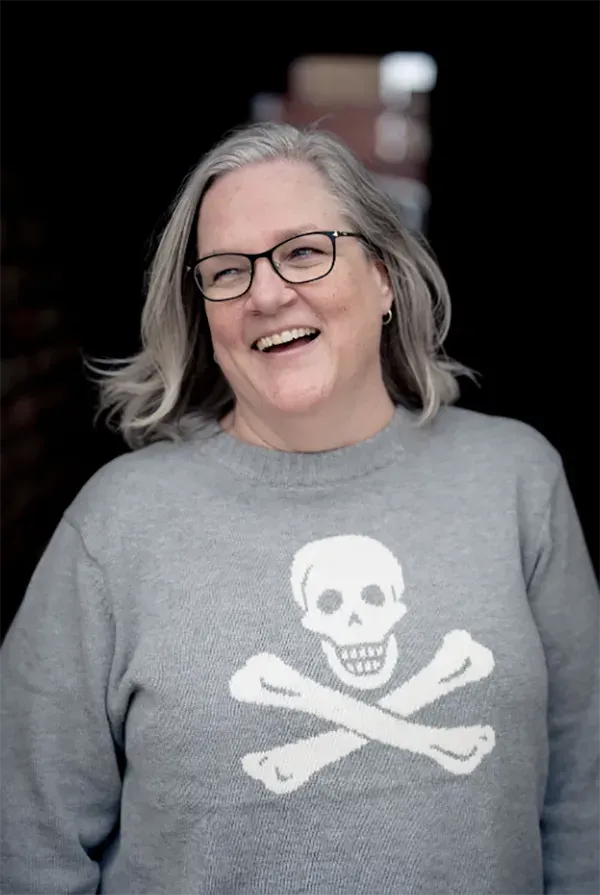
I don’t remember a time I didn’t know Lori Rader-Day. We started as online acquaintances then got to be better friends when I joined Mystery Writers of America and she was heavily involved in the Midwest chapter. More recently we’ve developed a closer friendship and have acted as sounding boards and cheerleaders for each other.
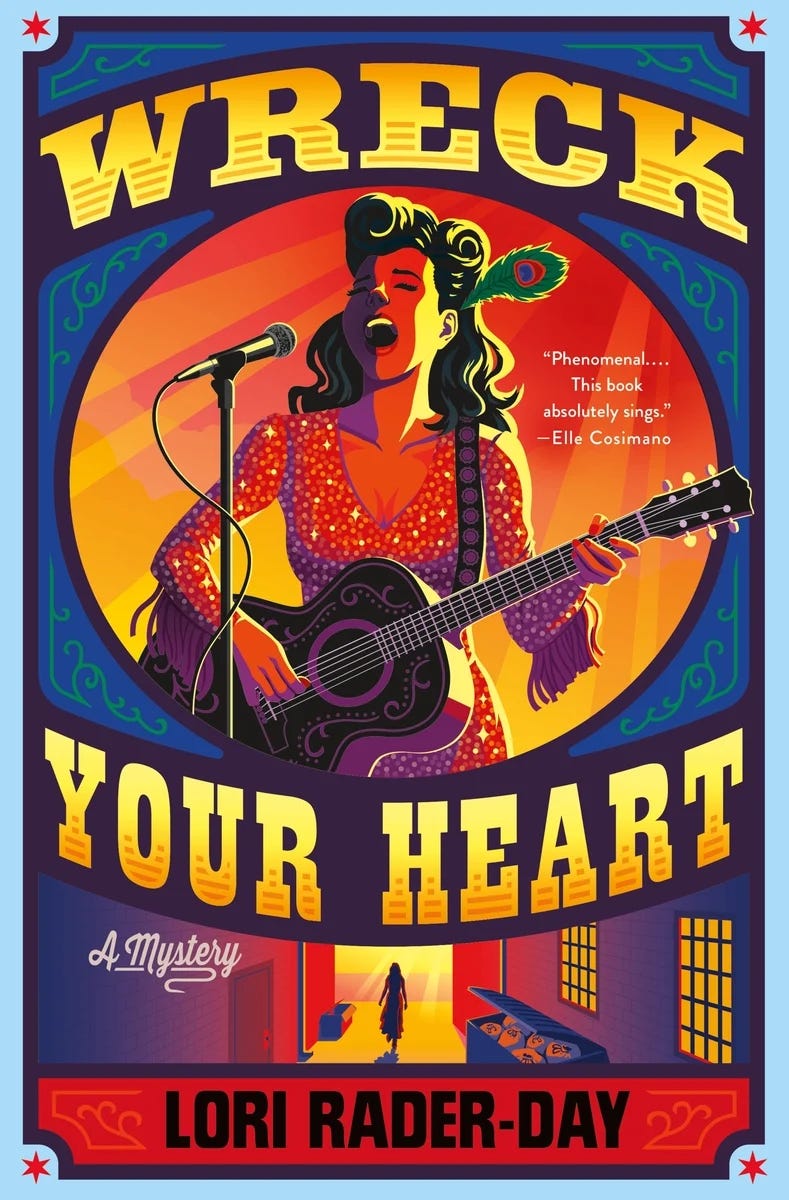
One of the things we’ve talked a lot about is getting past expectations of what we’ve already written or what people think we should write and to find what makes a really happy to write. For both of us, that meant leaning into our lighter and funnier sides. Lori’s answer is her latest book that was just published this month, Wreck Your Heart. I was lucky enough to read this book early and as a mystery fan, a country music fan, and a Lori fan it was everything I hoped it would be. Critics and readers seem to agree as well.
In addition to being a great writer, Lori is an amazing teacher and editor, and some of our best and most inspiring conversations were about breaking down how our stories work and why we do what we do and how to make it better. I hope you all find this conversation with her as engaging and inspiring as I’ve found talking to her.
Thanks for reading Magic to Do! Subscribe for free to receive new posts and support my work.
BQ: Can you remember the first story you ever wrote or told yourself? What compelled you to create it?
The first time I tried to write a story was when I realized that my favorite stories were being created by someone and—hey! Maybe I could be someone like that, a someone who made books, which I loved. My favorites at the time were Ramona Quimby stories by Beverly Cleary, and I was six years old, seven at best. So I decided to write my own Ramona story. Fan fiction, they call it now. At the time, maybe we called it copyright infringement.. I didn’t get very far, but I do remember being amazed that I could conjure this magic, words that hadn’t existed before, before I put them on paper.
BQ: Growing up in Indiana and now living in Chicago how did place, specifically the Midwest, shape your imagination as a writer?
My friend Kevin McKelvey, a poet and now sadly deceased, once theorized that kids like us who grew up in the flat-till plains—the middle of nowhere—became creative out of necessity. To entertain ourselves, to survive what life has planned for us. I’m not sure my environment required it of me. I lived in a town as a kid but then moved to the country, and books were with me every step, from town to country, to major city as an adult. The voice that demands you create can easily get quiet. If you fill your life with noise, if you’re well-adjusted, probably. If you are central to a lot of other people, maybe you don’t ever go deep into yourself the way writing requires.
BQ: Were there early books or authors that made you realize fiction could be powerful or dangerous?
In my high school English teacher’s classroom, she had a cart of books that weren’t required reading that we could choose from to read and report on for extra credit, or maybe it was an assignment, but we had to choose one for ourselves, no guidance. She’d probably be strongly discouraged from that practice these days. All that freedom to choose. I picked up The World According to Garp by John Irving which is, yeah, a really adult novel, actually. I remember that book sort of blowing my mind. I’d been doing all the assigned reading, of course, but I hadn’t realized that books could cover that much ground, be that interesting and wild. My teacher was a nice Christian lady, but she believed—believes—people can choose what to read for themselves.
BQ: You spent years in marketing and communications before publishing your first novel. What finally pulled you back to fiction?
I was a dabbler in fiction writing most of my life, but mostly I just talked about it. And I might have gone my whole life that way if a friend of mine hadn’t emailed me to say his first book was getting published. This is a good friend I’d once beaten in a writing competition in high school, and while I was so excited for him that I went and bought six copies of the book as soon as it came out and passed them out like candy, I was supremely envious of his accomplishment. But I knew that he’d put in the time I hadn’t. I realized I would have to put in the time. Not just talk about writing, but write and write a lot, be focused and serious about it. No more dabbling.
It would have been easier to keep dabbling or give up writing altogether, and maybe you’re asking me that. What pulled me back wasn’t just envy.
There’s something about writing that makes me myself, and when I’m not doing it, I feel that lack. I don’t live as fully. I don’t experience as fully.
My friend getting published wasn’t entirely about realizing he’d done the work and I hadn’t. That moment was about realizing kids like us (that’s the second time I’ve used that phrase) from places like we were from could write and publish books. I hadn’t realized that. There’s a lot of my self-worth tied up in writing. Hopefully not in publishing, which is something I don’t get to control entirely. But in writing, I get to stretch and learn, find out what I think and believe. Have fun. I like myself better when I’m writing, and I’m much more likable when I am, too.
BQ: What was the moment, or series of moments, that made you feel you were truly a writer?
I’ve always received a lot of self-satisfaction from the process, although showing your work to someone and having them respond always feels nice. I had some early supporters, including my grandmother, who liked to hear me tell my version of whatever family story was going on, and friends in high school and college who, once they realized I wrote stories, would check in on my progress because they wanted to read more.
When you feel like an author, now that’s a different question.
BQ: Did your time in the corporate world affect your narrative voice or discipline as a novelist? How did that change, if at all, once you got your MFA in Creative Writing?
My time in the corporate world sort of ruined me for writing for a while, a good long while. I had to separate myself from that for a while to figure out how to balance them. But I did. I went back to full-time work and had a doozy of a job, the highest level career-ladder job I hope I ever hold, fingers crossed. But I had gained discipline in my MFA program and knew I couldn’t let it slip again. So I worked during my lunch hours. I was a mid-level boss with a team of people under me and as much as possible I kept our calendar clean of lunch meetings. Of course it didn’t work all the time, but I tried. I wrote my first two published books that way.
My corporate jobs have been great, on the other hand, in training me to balance a lot of the other things authors have to do in addition to drafting. Media training, event planning, team building, community building. It is not a coincidence that I came up as a fledgling novelist through volunteer leadership in Mystery Writers of America and Sisters in Crime.
BQ: What does your writing routine look like now? Has it evolved significantly over time?
It evolves all the time, to be honest. At times, I am very disciplined. At others, I can be very lazy, a member of the Procrasti Nation. But I’ve been rewarded for that behavior by finding my stories through delay tactics, by having my novels turn out better than they would have if I’d churned out a draft more quickly. Who knows? I don’t think there’s one way for a writer to do this work, and there’s really not one way that I work. I try all the tools, including rest.
BQ: Are you a meticulous plotter, a discover-as-you-go writer, or something in between?
I’m definitely a discoverer. I just named that. Tell everyone.
Actually, OK, I have a new theory and I’ll try it out here on you. I think the people who spend six months writing a 200-page outline (Jeffery Deaver, for instance) and the people who spend six months writing a 200+ page first draft (me) aren’t at the polar opposites of a spectrum. I think they are pretty close, actually. Maybe the difference between those two people is how much of those 200 pages they expect to use. But as a discoverer-as-I-go, I rewrite pretty much every word of my draft over time. Jeffery Deaver and I both expect to use the next step to write the real book.
In either case, I think we need to talk more about how people have to find their own way. The only way that works is the way that gets you coming back to the page.
BQ: What draws you back to the page over and over again? Character, image, question, or something else entirely?
It’s a different thing every book that gets me started, gets me curious. My curiosity, I suppose, is the broader answer. After I’ve started writing, it’s my enthusiasm that keeps me coming back. If I’ve done it well, I have opening pages that make me happy to spend time with the character discovering what she (usually) is up to next. It’s hardly ever some Big Idea, though eventually some of those sneak in and have to be dealt with.
BQ: Your work often explores grief, guilt, and memory. Do these themes find you, or do you seek them out?
The Big Ideas, there they are. Probably I check in with the same ones over and over. We just do. The first serious story I ever finished, in high school, dealt with grief, before I had even really experienced it—so what does that say about how I’m set up, brain chemistry-wise? But they are also the most interesting things about humans, really. Why would we not poke at them once in a while to see how our understanding of them is coming along? By the way, my understanding of grief has been coming along quite nicely, thanks to life. Thanks, life.
I would love to succeed with this weird, funny book in a way that my more Serious Crime Fiction books didn’t, maybe in that Knives Out, Only Murders in the Building, Poker Face kind of way that television finally figured out we liked to laugh.
BQ: You’ve been a prominent voice in psychological suspense and crime fiction, but your new book seems to go off that path toward more humorous territory while still maintaining the heft and weight of psychological suspense. What draws you to this territory and why the move toward the lighter side?
Check in with the answer above. When life just keeps lifing, what are you going to do? Surround yourself with more darkness?
The truth is that I’ve always been a fun-loving person. I like to have a good time. I get asked a lot after panels, in particular the ones I moderate, if my books are funny. Oh, no. NO. Don’t go to The Death of Us for laughs. But why not? I’m a person who loves to laugh. I always had some fun writing my novels, but I decided recently that I could, I don’t know, maybe let the readers in on the fun.
The other truth is that after I went through the horrors of the pandemic with y’all, I had a second lockdown because of breast cancer: surgery, chemotherapy, radiation. I’m doing OK now, four years out, but in the middle of the lockdown and then cancer, did I want to talk more about crime and evil? Did I even want to keep writing? I found that I did, that writing was the thing that held me to myself even as chemotherapy tried to pull me apart. But the process was killing me, at least the way I do it and can’t seem to fix: long hours trying to get a couple thousand words, long hours trying to fix all those words, all the time spent promoting the books… why couldn’t that process be more joyful? So I leaned into what I was enjoying: country music, canines, Chicago, cereal. The four Cs. But it will be something else for the next book. The point is to lean into my own joy and curiosity from here on out. I’m hoping my readers will go with me.
BQ: You and I have talked quite a bit about the stigma around genre writing. How has your experience in the literary side of that world informed your views on genre? And now with a move toward the lighter side, how do you deal with the negative perceptions around humor in crime fiction?
The first books for adults I read were by Agatha Christie and Mary Higgins Clark. It was always going to happen. Why did it take me as long as it did, though? I’m not as self-aware as one might like, as a writer.
I don’t think I ever had any snotty opinions of genre the way some do, but I had fallen away from reading mystery when I was told I might be writing a mystery novel. (I had to be told.) I think it was more about how readers don’t think about genre in quite the same way as writers—or, actually, the marketing teams of writers—do. As a reader, I’m a genre slut. Aren’t you? I read very widely: crime but also true crime, mainstream fiction, historical, biography, memoir, weird, speculative a little. Not much fantasy or sci-fi, but, hey, Terry Pratchett? Hell, yes. I think a lot of readers are like that, probably most of them, most of the time.
It’s only when you have to sell your work does it become important to label it. And it’s such a drag to have to button up a wooly, wild story into one container and close the lid.
Bryon, I’m hoping to angrily flip the table clear of any negative perceptions about humor in crime fiction. Why are we letting other people have all the fun? I read widely. Why can’t I write widely? And actually, it’s not even that much of a leap. The container that will be used won’t even change. It’s a traditional mystery in the sense that Little Pretty Things was, and Under a Dark Sky. I just let myself have a Goonie adventure and, this time, I took the readers with me.
I would love to succeed with this weird, funny book in a way that my more Serious Crime Fiction books didn’t, maybe in that Knives Out, Only Murders in the Building, Poker Face kind of way that television finally figured out we liked to laugh. The people who figured that out have been richly rewarded.
All this to say: We have to write the books we want to read. Wreck Your Heart and the next novel are still about all the Big Ideas you noticed. I’m just having a lot more fun writing about them.
BQ: In Death at Greenway, you blend historical fiction with suspense. What was the greatest challenge of writing a real-life figure like Agatha Christie into your narrative?
Dear god, FACTS. The historical record is so bossy. Actually, I’m joking. Research turned out to be really generative, story-wise. I just didn’t know how to do it. The greatest challenge for me was, could I write Agatha Christie as a character that I could trust? I like historical fiction, but I like historical fiction with depth that I can trust and believe. There’s very little of Agatha as protagonist in Death at Greenway, much to the sadness of many readers, apparently. But Agatha was never the star of the book I wanted to write. The house was. I would never have attempted having a second of Agatha’s perspective if I hadn’t been able to find a lot of good research about the moment war was announced. She and her husband both wrote about it. If they hadn’t been at Greenway, in the kitchen, listening to the radio announcement, I would have written her out of it entirely. I respect her too much to try to puppet her into a plot I made up. She wouldn’t have liked that, in my opinion. My personal challenge in writing this book, in addition to overcoming my own limitations, was in trying to use as much fact as possible, even when it made writing the story harder for me. I was never going to puppet Agatha Christie into solving a crime, because that’s not what Agatha Christie did.
BQ: What role does research play in your novels? How do you avoid letting it overwhelm the story?
Oh dear. I just told you I let the research dictate the story.
Usually this is not a problem because I don’t like to do research. So I write the books the way I hope things are, as much as possible, and then I find someone who can tell me where I’m wrong. For contemporary novels, this works pretty well. I might have to write around a distressing truth in the process of learning more.
In historical fiction… I just didn’t have the foundational knowledge to jump in and start guessing, so I had to do research—before, during, and after drafting—simply to figure out what to put on the page, which words to use, which events to include and which to leave out. What daily life looked like. I came around on research while doing it for Death at Greenway, though, because I could learn so much about the real people who lived on the estate at the time and that information made the story more true, as well as better, more interesting. More complicated. Definitely more complicated, but then that’s what real life is like.
BQ: How do you decide which point of view to use in a given novel? Is that instinctual or strategic?
I make a lot of considerations on point of view, sometimes. The most deliberate choice I’ve made in point of view was when I knew that I might be trying to write about World War II for Death at Greenway soon, but I knew I wouldn’t want to try a first-person English protagonist’s voice from 19-freaking-41. Third person ahoy!
So for the book before it, The Lucky One, I wanted to practice with third person point of view. But then I needed two protagonists, both young women living in the Midwest, and needed them to sound different from each other, even in third. Also once you’ve inserted distance between the reader and character by choosing third-person, you should use that distance for something. I played with narrative irony, between what the characters each know individually, and what the reader can see as a whole. Like I said earlier, I always amused myself with these things.
Other times, the choice is natural. The first-person of Wreck Your Heart was an automatic choice, because Dahlia Devine arrived saucy, funny, with a lot to say. And then she broke the fourth wall, too, which I’d never done before.
BQ: You’ve been active in Mystery Writers of America and Sisters in Crime. How does being part of a writing community influence your own work?
Where do I start? Maybe other genre communities are different but in crime fiction, our community is so welcoming and generous, I think it’s just a great way to get involved, learn the ropes, build a community of people who model what being a working writer looks like and people who will support you with things like blurbs and social media shout-outs when the time comes. Of readers of your work when you finally publish. And of course if you put in the time and remain a good citizen of the community, you can probably get where you’re going more quickly, because people will share ideas and connections more willingly. I got my agent because I got a referral from someone I knew from MWA and SinC. I would have landed an agent anyway, maybe, but I got the agent I did (who I still work with) because of that willing assistance.
The trick is putting in the time. It’s not about paying a fee and being a member. It’s about being a part of the community. I tell people to sign up and then go to meetings early and offer to help set up chairs. Whatever it is, you have skills to share and assistance to offer. Start small and get involved.
BQ: What contemporary authors have challenged or inspired you in recent years? What’s the last great book you read? Also, how do you read these days? Are you an all print all the time person or do you dabble in ebooks and/or audio books?
I love what Megan Abbott and Lou Berney are doing. Megan went full Midwest-press with El Dorado Drive, and if it doesn’t win awards, there is no goodness in this world. Lou went more fun this last time out, too, with Crooks. Loved it. In crime fiction, I love how much fun Richard Osman is having with his two series. They’re really extraordinarily plotted, too. I love the Vera Kelly series by Rosalie Knecht. The best crime book I’ve read recently other than all those would be Bright Young Women by Jessica Knoll. It’s honestly astonishing, and I don’t usually like serial killer books. I’ve been reading outside crime a lot recently: Catherine Newman’s Sandwich and Wreck are both charming and great. Daniel M. Lavery’s Women’s Hotel, charming and plotless and great. My new auto-buy writer is Kevin Wilson, who writes weird family stories that are hard to describe, but wonderful. My favorite is Nothing To See Here, in which spontaneous human combustion factors in the story.
This is all paper. I don’t have the attention span for audio. Ebook if I’m getting something from the library.
BQ: Do you ever find yourself haunted by your characters after the book is finished? Or do you let them go easily?
I let them go fairly easily, although I miss them. One time I found myself thinking about a friend I hadn’t talked to in a while and realized—oh, that’s Lissette, from The Death of Us. I have real friends, I swear.
BQ: Do you think at all about your literary legacy? What do you hope readers take away from your work?
I don’t think any of us need to worry about legacy. We are living at the same time as people who sell billions of copies, and Jane Austen still sells really well, 250 years later. In the history books, they’ll be passing right over us. There’s a lot to say about… things.
I hope people read my work and think, She might be fun to hang out with. Maybe I feel like a friend or like someone who might be nice to have a drink with. All that stuff that is going in the history books about the times we live in–they take a lot out of us. In addition to what regular life requires. It’s OK to read for our own pleasure, for our own survival. And it’s OK to write for it, too. I was recently talking to our friend James DF Hannah about this kind of thing, branding and blah blah. Legacy, sort of. The question on the table had to do with the seriousness of our work in these very serious times and I said—and believe—that it’s OK if what we write doesn’t save the world. It’s OK if what we write only saves ourselves. But maybe in the process of doing that, we can reach out a hand to someone else, too.
Lori Rader-Day is the USA Today best-selling author of Wreck Your Heart, The Death of Us, Death at Greenway, The Lucky One, Under a Dark Sky, The Day I Died, Little Pretty Things, and The Black Hour. Her work has been nominated for the Edgar® Award and has won the Agatha, Anthony, and Mary Higgins Clark awards. She lives in Chicago, where she is leads the mystery readers’ festival Midwest Mystery Conference and teaches creative writing for Northwestern University’s School of Professional Studies.